AI, automation and what’s practically useful in aerospace and manufacturing


Elia Corkery
Marketing Manager
Published:
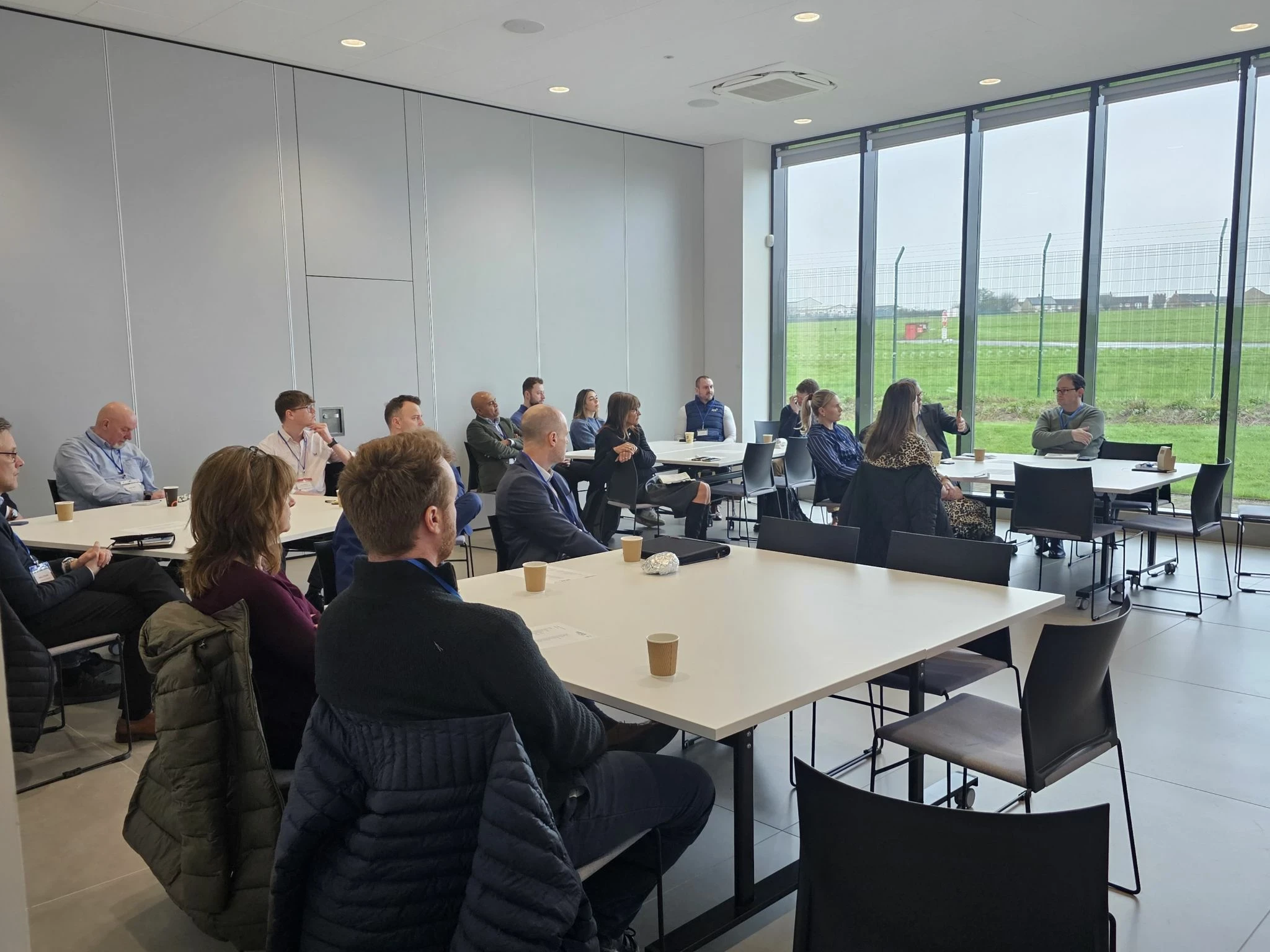
Last week at the iAero Centre in Yeovil, members of the WEAF network joined a session facilitated by WEAF and hosted by New Icon, led by our CEO, Dolo Miah.
The focus wasn’t on futuristic AI promises or theoretical use cases. Instead, the morning centred on real conversations about the challenges organisations across aerospace and manufacturing are facing today, and whether artificial intelligence and automation can genuinely help solve them.
From contract reviews and scheduling pressures to payment delays and manual spreadsheets, the room was full of people asking the same underlying question:
Could AI be part of the answer, and if so, where do we start?
Starting with the problem, not the technology
From the outset, Dolo was clear that successful digital transformation doesn’t begin with tools, it begins with understanding the problem.
AI and automation were framed in simple terms:
AI as systems that support better, faster decision-making
Automation as software that removes repetitive, manual work
But throughout the session, one message was repeated: AI is not the solution to everything.
Time and again, Dolo returned to the foundations of effective transformation: People. Process. Technology.
Without clear processes, reliable data, and engaged teams, even the most advanced AI systems will fail to deliver value.
AI is not the goal, removing friction is.
Where AI can make the biggest difference
Using a practical framework, Dolo explored how AI and automation can support different parts of the organisation, regardless of your sector:
Front office
Improving customer experience, service quality and long-term growth.
Middle office
Enhancing operational efficiency, manufacturing performance and scheduling.
Back office
Supporting finance, HR, reporting and compliance through secure automation.
Rather than encouraging large-scale change, the emphasis was on focus.
In aerospace and advanced manufacturing, where safety and reliability are critical, innovation must be targeted and controlled - you don’t need to change your whole operation to innovate.
Learning from real-world experience
To ground the discussion in reality, Dolo shared two applied examples.
Decision support
AI systems supporting faster, more consistent decisions, while retaining human oversight, transparency and accountability.
Predictive maintenance
Machine learning models analysing operational data to predict equipment failure and improve uptime, helping teams move from reactive fixes to proactive performance.
Neither began as “AI projects” - they began as clearly defined operational challenges, and evolved from there.
What members are really grappling with
One of the most valuable parts of the session came during the open discussion during the second half of the workshop, where members shared the issues they are actively trying to solve.
Common themes included:
Contract review and compliance processes requiring human sign-off
Scheduling and resourcing pressures
Manual spreadsheets and inconsistent data descriptions
Delays in payment settlement and insurer engagement
Limited visibility over internal use of digital tools and AI systems
Implementing AI in skilled, manual environments
These conversations highlighted that many challenges are as much about data quality, governance, and process maturity as they are about technology.
Balancing opportunity with risk
A recurring theme throughout the morning was balance. Members discussed the need to weigh:
Implementation cost
Data security and cyber security requirements
Governance and compliance obligations
Measurable business benefit
The question was never simply: “Can we use AI?”
It was: Can we use it securely, responsibly, and in a way that delivers real value?
Innovation without disruption
The session closed with a practical approach to responsible innovation:
Protect business-as-usual
Start small and low risk
Learn before you scale
For organisations in aerospace and advanced manufacturing, this approach supports progress without compromising safety, security, or compliance.
Behind every successful initiative sit:
Reliable data
Clear processes
Appropriate controls
Engaged people
Digital transformation works best when innovation and governance evolve together.
Where should you focus next?
If you’re thinking about where to innovate next - across your front, middle or back office - our team works with organisations to map operational friction, prioritise opportunities, and focus investment where it delivers real business impact.
Sometimes that involves AI, sometimes it doesn’t - what matters is solving the right problem first. Let’s start the conversation.
Elia Corkery
Marketing Manager
Elia has more than five years’ experience across marketing, communications and PR, with a focus on B2B and technology marketing. At New Icon, she leads marketing across content, digital campaigns, events and search, translating complex topics across AI, software and digital transformation into clear, engaging content for business audiences.
